
Biomass Briquettes – Clean, Renewable Fuel for a Sustainable Future.
Turning agricultural waste into high-efficiency eco-friendly energy.
What Are Biomass Briquettes?
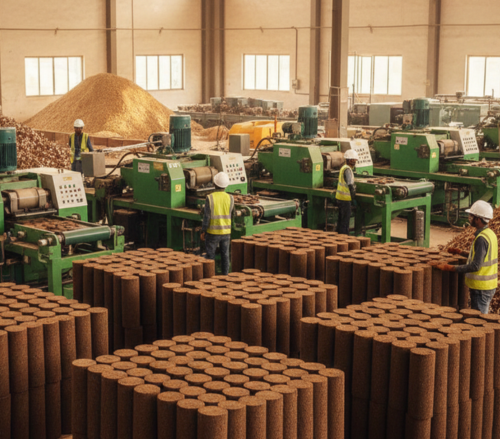
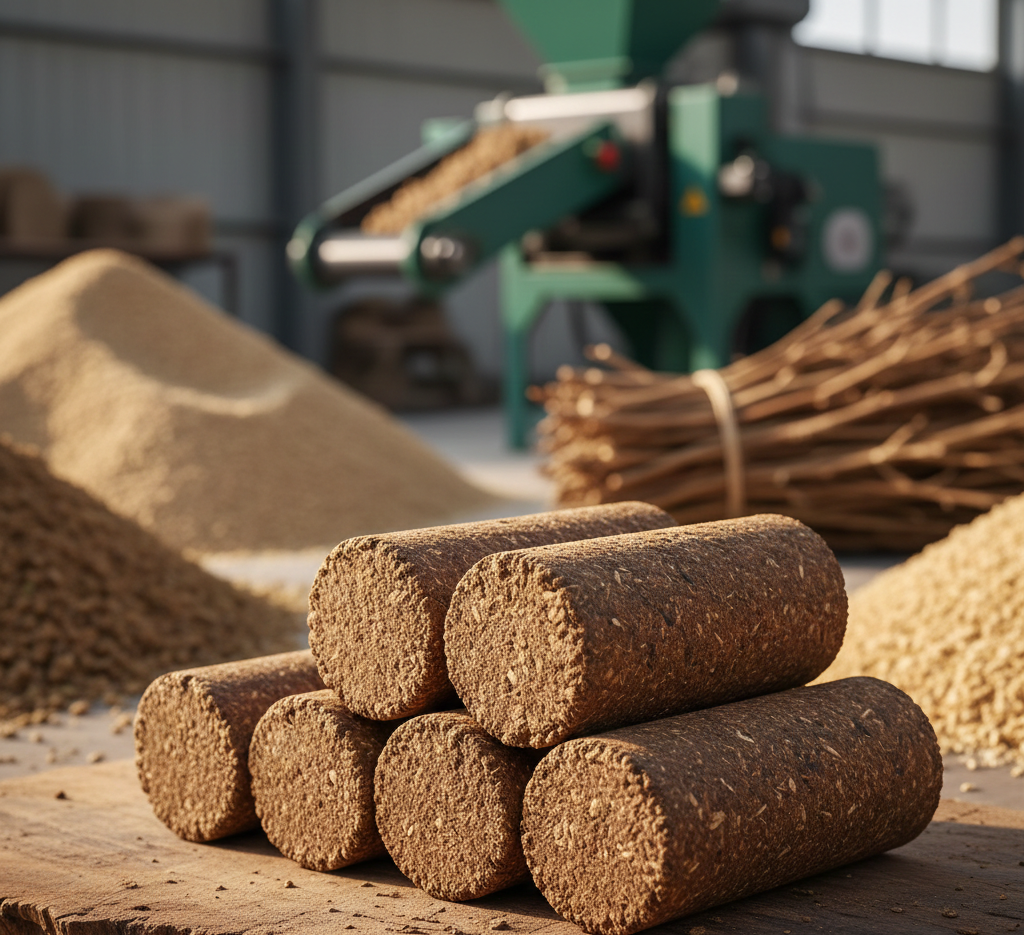
Biomass briquettes are compact blocks made from agricultural waste such as soybean husk, cotton stalk, sawdust, and other organic residues. These materials are compressed under high pressure through a process called briquetting, without the use of harmful chemicals.
By converting waste into fuel, biomass briquettes provide a clean and renewable alternative to coal, firewood, and fossil fuels. They have high calorific value, low moisture content, and produce minimal smoke, making them an efficient and eco-friendly energy source.
We follow eco-friendly farming practices that conserve water, protect soil fertility, and promote long-term agricultural balance. For us, farming is not just cultivation — it is a commitment to the land, the environment, and the communities that depend on it.
Advantages of Biomass Briquettes
Environmentally friendly and reduces carbon emissions
Made from agricultural waste that would otherwise be burned
High heat output and longer burning time
Cost-effective compared to coal and firewood
How Biomass Briquettes Are Made
Step 1
Raw Material Collection
Step 2
Preparation
Step 3
Drying
Step 4
High-Pressure Compression
Your Title
Applications of Biomass Briquettes
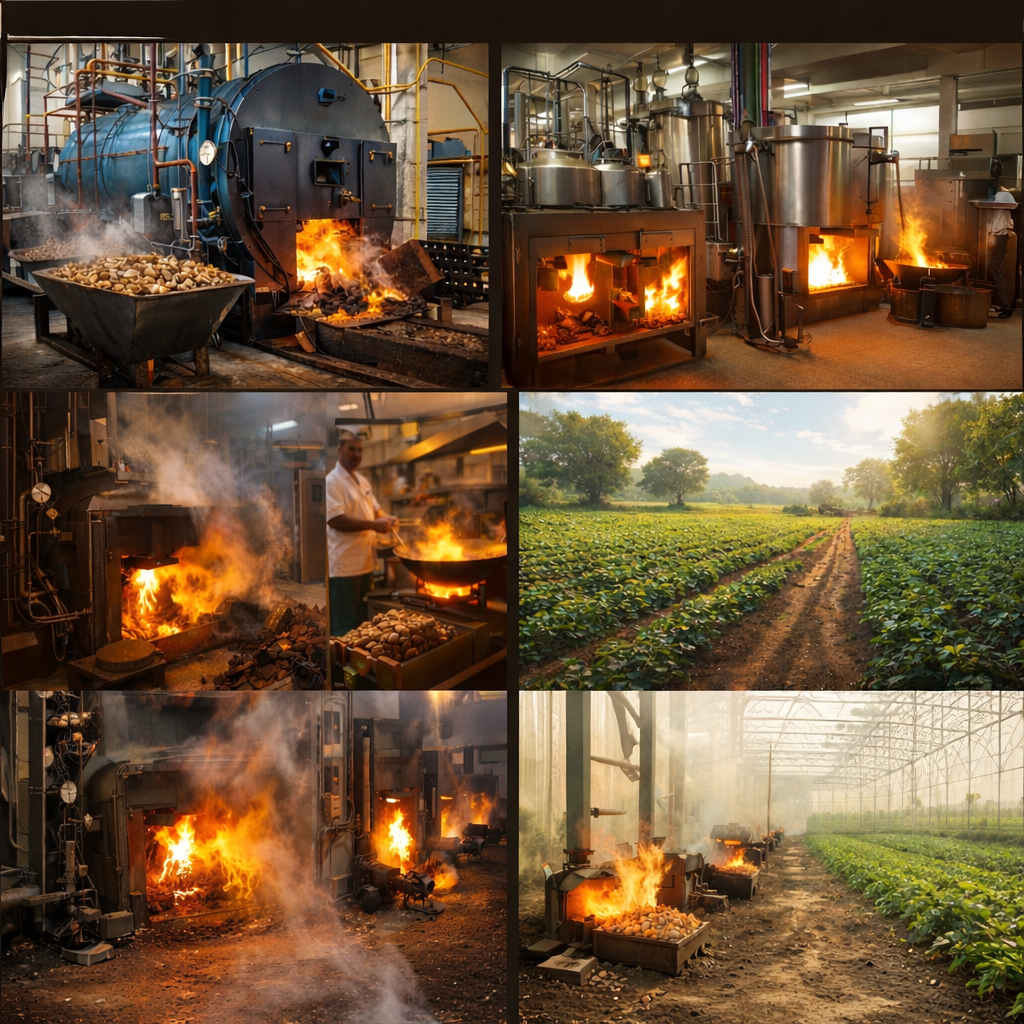
• Boilers in factories
• Food processing industries
• Hotels and restaurants for cooking
• Textile and manufacturing units
• Agricultural crop drying and greenhouse heating
Why Choose Ida Agrico as Your Briquette Supplier?
• 50 MT/day production capacity
• Consistent quality and size of briquettes
• Reliable supply and timely delivery
• Sustainable sourcing of raw materials
• Modern machinery and skilled workforce
• Competitive pricing with high efficiency
• Commitment to environmental responsibility